
Audit pack: the records to hand an inspector, ready in one PDF

    An audit pack is a single, tidy set of your compliance records for a chosen period. It is what you hand an environmental health officer (EHO), fire safety officer, insurer or head office auditor when they ask how you keep things safe.

    Below is what goes in one, a checklist for putting one together on paper or digitally, and a sample audit pack from LogBooks Hub that you can open, print or download as a PDF.

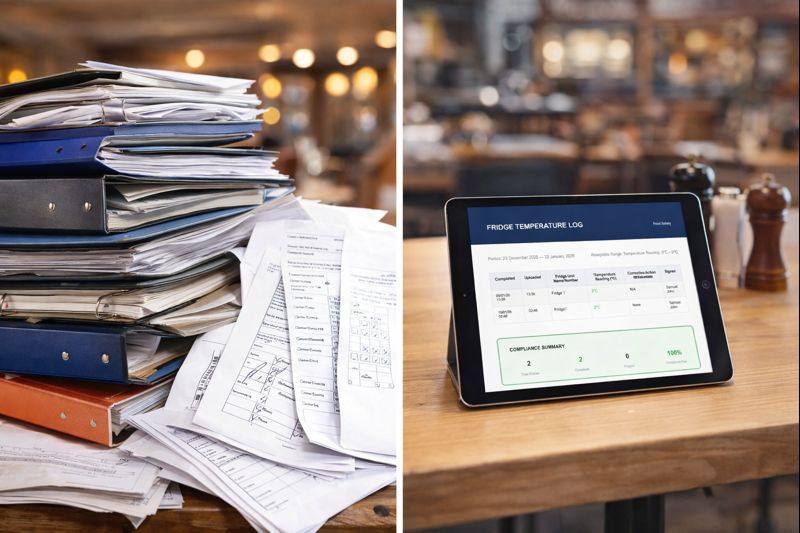
    A LogBooks Hub audit pack PDF next to a stack of paper logbooksOpen the full sample report →

    What is inside a LogBooks Hub audit pack

    Cover page with premises and period

    Business name and address, the reporting period you chose, the date and time the report was generated, and a list of every logbook included.

    One section per logbook

    Each log, such as fridge temperatures, cooking temperatures, deliveries and opening checks, has its own section with its category and the safe range or target it was checked against.

    Every entry, timestamped and signed

    Each entry shows the date and time it was completed, the reading or check result, any corrective action and the name of the person who did it.

    Out-of-range readings flagged

    Entries outside the safe range are highlighted, so you and the inspector can see at a glance where something went wrong.

    Summary for each log

    Total entries, how many were compliant, how many were flagged, and a compliance percentage for the period.

    Problems and corrective actions

    A log of problems reported during the period and the action taken, with date, time and who signed it.

    Records that cannot be quietly changed

    Once an entry is logged it cannot be deleted or backdated, and each report carries a unique report ID.

    Any date range, in one click

    Choose the period you need, such as the last quarter, and export it as a PDF to print, email or show on screen.

    What is an audit pack?

    An audit pack is a bundle of the records that prove your checks are happening: temperature logs, cleaning schedules, delivery checks, fire alarm tests and so on, for a set period. It is not a new legal document. It is a way of presenting the records you should already keep, so an inspector can find what they need quickly.

    Food law says businesses must keep records that suit their size and nature and give the authorities evidence that their procedures work. Fire and health and safety guidance says the same in its own way. An audit pack is simply that evidence, organised.

    Who asks for one

    • Environmental health officers checking food hygiene. How you manage food safety is one of the three things that decide your food hygiene rating.
    • Fire safety officers from your local fire and rescue authority, who may ask for your fire risk assessment and records of alarm, emergency lighting and drill checks.
    • Health and safety inspectors, for example on legionella, where HSE says monitoring results should be kept for at least five years.
    • Insurers, at renewal or after a claim, who may ask to see maintenance and safety records.
    • Head office, franchise or brand auditors, checking sites against company standards.
    • Landlords and managing agents, for shared buildings and water systems.

    Audit pack checklist

    Pick the parts that apply to your business. Whether on paper or digital, each record should show the date, the result, who did it and what was done if something was wrong.

    Gaps tell a story

    Inspectors notice missing days, identical readings and problems with no action recorded. Do not tidy these away. A pack that shows a problem being spotted and fixed is more convincing than one where every entry is perfect.

    Building one on paper

    Gather the logs for the period into one folder, in the same order every time. Add a contents sheet and check each log for missing days before you hand it over. It works, but it usually means an evening of sorting, and records can go missing in between.

    Building one in LogBooks Hub

    1. Pick the logbooks you need from 90+ logbook types.
    2. Staff complete checks on the iOS or Android app or in any browser. Each entry is timestamped and named, and photo evidence can be added.
    3. Reminders prompt the team when a check is due, so fewer days go missing.
    4. When someone asks, choose the date range and export the audit pack as a PDF in one click.

    Have a look at the sample audit pack to see the layout before you start. Pricing is from £30/month.

    Frequently asked questions

    What should be in an audit pack?

    The records that prove your checks are happening for a set period: temperature logs, cleaning, deliveries, opening and closing checks, allergens, fire safety tests, training and a log of problems with the action taken. Each entry should show the date, the result and who did it. The checklist on this page covers the full list.

    Is an audit pack a legal requirement?

    Not as a named document. What the law requires is that you keep suitable records and can show them when asked. For food businesses, that includes records that suit the size and nature of your business. An audit pack is a way of presenting those records clearly.

    Can I show an EHO digital records instead of paper?

    Yes. The Food Standards Agency says completed Safer Food, Better Business diary pages can be kept electronically or as printed copies. What matters is that the records are complete, accurate and available when the officer asks.

    How far back should an audit pack go?

    It depends on who is asking. An EHO will usually want records since the last inspection, and the FSA says to keep SFBB diary pages until your next visit. Some records must be kept longer: HSE says legionella monitoring results should be kept for at least five years. With LogBooks Hub you choose any date range when you export.

    Can I see a sample audit pack?

    Yes. Open the sample audit pack to see a real LogBooks Hub report for a demo kitchen, including fridge, cooking and delivery logs, opening checks, a flagged reading and a problems log. You can print it or download it as a PDF.

    Will an audit pack improve my food hygiene rating?

    Not on its own. Your rating depends on how food is handled, the condition of your premises and how you manage food safety. Good records support the third, but they need to reflect what really happens every day. See what an EHO looks for in your records.

    Official guidance and sources

    This page is general guidance, not legal advice. Rules differ between England, Scotland, Wales and Northern Ireland; check with your local authority if you are unsure.